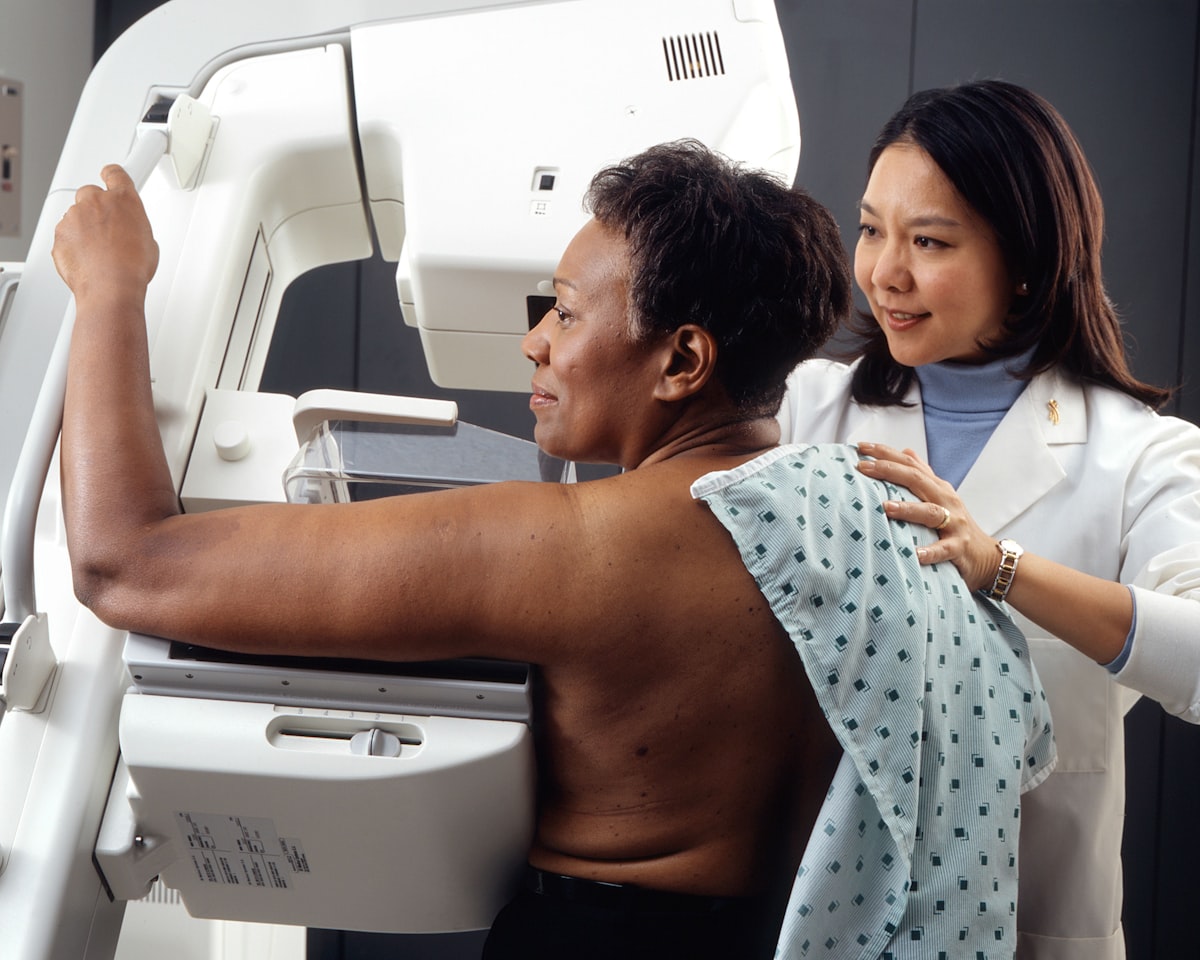
Breast cancer is the most commonly diagnosed cancer in women worldwide. Yet the chances of surviving it depend enormously on where you happen to live. In the United Kingdom, the five-year survival rate is over 85%. In Indonesia and Pakistan, it sits closer to 40%. The single biggest driver of that disparity is access to screening.
What screening actually does
Screening — typically mammography for women over 40, or clinical breast examination in settings where imaging is unavailable — finds tumours before symptoms appear. A cancer detected at Stage I is almost always curable. The same cancer found at Stage III or IV, when it has spread to lymph nodes or distant organs, is far harder to treat and far more likely to be fatal.
The UK's NHS Breast Screening Programme, introduced in 1988, invites every woman aged 50 to 71 for a mammogram every three years. Studies consistently show it has contributed to a significant reduction in breast cancer mortality in the decades since. Crucially, that benefit was achieved not by finding a cure — treatments have improved, but the biology of the disease has not changed — but simply by finding cancer earlier.
The barriers that keep screening out of reach
In most of South Asia and South-East Asia, no equivalent national programme exists. The barriers are multiple and reinforcing.
- Cost: A mammogram can cost several weeks' income for a woman in a rural Indonesian or Pakistani household. Without public subsidy, it is simply unaffordable.
- Infrastructure: Mammography machines require regular maintenance, trained radiographers, and reliable electricity — none of which can be taken for granted in underserved provinces.
- Awareness: Many women — and their families — do not know that breast cancer can be caught before a lump becomes painful. Cultural norms in some communities mean that women delay seeking care even when symptoms are present.
- Geography: Health facilities are concentrated in cities. Women in rural areas may face a journey of many hours simply to reach the nearest clinic.
- Stigma: In some communities, a breast cancer diagnosis carries social stigma that discourages women from attending any examination.
Mobile screening: bringing the clinic to the community
One of the most effective tools for bridging this gap has been the mobile screening unit — a vehicle equipped with ultrasound or digital mammography equipment that travels to rural and peri-urban areas, bringing screening directly to women who would otherwise never receive it. Our funded programmes in Indonesia and Pakistan use this model alongside community health educators who work within villages, mosques, and community centres to raise awareness and encourage attendance.
The results speak for themselves. In one recent six-month programme in West Java, 94% of the women who presented with a suspicious finding had never been screened before. Without that intervention, the majority would not have received a diagnosis until their cancer was advanced.
What your donation funds
Every pound donated to Breast Cancer Awareness goes directly to the field. That means funding clinical breast examinations, subsidising diagnostic follow-up for women with abnormal findings, and training local health workers to carry out awareness sessions in their own languages and communities. It also means advocating — alongside partners in country — for the kind of sustained government investment in screening infrastructure that can make the difference permanent.
Screening is not glamorous. It does not make headlines. But it is, hour for hour and pound for pound, one of the most effective life-saving interventions in global health. We believe every woman — wherever she lives — deserves access to it.