Every October, the world turns pink. Buildings light up, supermarket products switch packaging, sports teams change kit, social feeds fill with ribbons and runs. Breast Cancer Awareness Month is, by some measures, the most successful single-issue health campaign in history. It has also, in recent years, attracted serious and thoughtful criticism. Both perspectives are right — and neither is the whole story.
What breast cancer awareness actually means
Breast cancer awareness, at its core, is about three things: knowing the signs and symptoms, knowing your own body well enough to spot a change, and knowing what to do when you find one. The NHS message is simple — be breast aware. That means looking and feeling regularly, knowing what is normal for you, and going to your GP without delay if you notice something different.
Awareness is not the same as fear. The point is not to make every woman anxious about every lump — most are not cancer. The point is to ensure that the small minority who do have cancer find it at a stage when it can be treated successfully.
Why awareness matters so much
Stage at diagnosis is the single biggest predictor of survival in breast cancer. A cancer caught at Stage I has a 5-year survival rate of around 99% in the UK. The same cancer caught at Stage IV has a 5-year survival of around 28%. Nothing else in cancer care — no drug, no surgical technique, no genetic test — moves the needle on survival the way early detection does.
Awareness is what makes early detection possible. Routine screening catches some cancers, but most are still found because a woman or her partner notices a change and goes to be checked. If she notices but doesn't act — or doesn't know that what she's noticing matters — that early-stage cancer becomes a late-stage cancer.
What to look and feel for
The NHS list of breast changes that should always prompt a visit to your GP is short and worth knowing by heart:
- A new lump or thickening in the breast or armpit, especially if it is painless.
- A change in the size, shape or feel of one breast.
- Skin changes — dimpling, puckering, redness, or a texture like orange peel.
- Nipple changes — a newly inverted nipple, discharge that is not breast milk, or a rash on or around the nipple.
- Persistent pain in the breast or armpit that doesn't go away with your menstrual cycle.
None of these symptoms means you have breast cancer. Most women who notice them turn out to have entirely benign causes. But the only way to know is to be checked.
The criticism of Breast Cancer Awareness Month — and why it has substance
There are two main criticisms of October's pink campaigns, and both deserve to be taken seriously. The first is 'pinkwashing' — the practice of companies attaching pink ribbons to products in ways that benefit their brand far more than they benefit breast cancer charities. The second is that awareness in countries where survival rates are already very high arguably yields less benefit per pound than equivalent investment in countries where survival rates are very low.
These critiques don't undermine the case for awareness; they sharpen it. The question is not whether to mark Breast Cancer Awareness Month, but how to do so in a way that genuinely helps. That means choosing where your fundraising goes carefully, asking what proportion of pink-product purchases reaches a charity, and recognising that the global picture of breast cancer is very different from the UK picture.
How to make October count
If you want this October to do real work, here are five practical things any reader can do — most of them free.
- Check yourself, monthly. Use the NHS-recommended Touch–Look–Check routine and know what is normal for you.
- Talk to the women in your life. Mothers, sisters, aunts, friends — share the symptoms list. In some communities, simply naming the disease reduces stigma.
- Attend your screening. If you are 50–71 in the UK, you are invited automatically. Don't ignore the letter.
- Donate where it goes furthest. Look at where the charity actually spends its money. UK research, UK support and overseas treatment access are all valid causes; pick the one that matches your values.
- Push back gently on pinkwashing. Ask what percentage of any pink-product purchase reaches a breast cancer cause. Often the answer is surprising.
Awareness in the global context
In the UK, awareness is now high. Most women know the basics. The next-generation challenge is keeping that knowledge alive across new cohorts and ensuring it crosses class, language and cultural lines that are sometimes less well served by mainstream campaigns.
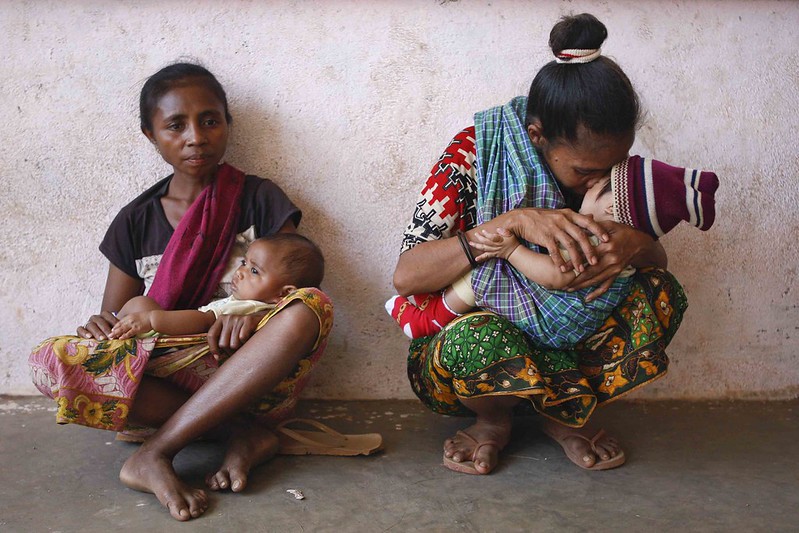
In Indonesia, Pakistan, Bangladesh and across South and South-East Asia, awareness is still very low. Many women have never heard the basic facts. This is where Breast Cancer Awareness concentrates its work — funding community health workers who carry the awareness message into villages, mosques and rural clinics where the alternative is silence and late diagnosis.
October is a global moment. It is right that the UK marks it. It is also right to ask, every year, whether we are using it as well as we could. We hope this guide helps.
What breast cancer awareness sometimes gets wrong
Honest critique of awareness campaigns is essential — not because awareness is unimportant, but because the same energy can be channelled in better and worse ways. Three patterns are worth flagging.
The first is 'pinkwashing' — the practice of brands using the pink ribbon for marketing without donating a meaningful proportion of profits to breast cancer causes. Some campaigns are genuinely substantial. Others are a sticker on the packaging. The Charity Commission and the Fundraising Regulator both encourage donors to look for clear statements of how much money each commercial campaign actually delivers, and to give directly to the chosen charity if in doubt.
The second is the over-emphasis on positivity. The cultural script around breast cancer in the UK has, in recent decades, leaned heavily on 'pink positivity' — survivor stories, celebratory walks, upbeat messaging. This has been valuable for many people. For others — particularly those living with metastatic breast cancer, where the disease is treatable but not curable — relentless positivity can feel alienating. UK charities and patient communities have made progress in widening the conversation to include metastatic experiences, but the imbalance still exists.
The third is the under-coverage of the global picture. The NHS, by international standards, delivers excellent breast cancer outcomes. UK awareness campaigns generally reflect this — focusing on early detection through familiar pathways. But globally, breast cancer is still the leading cause of cancer death in women, and the great majority of those deaths happen in countries where awareness work has not yet had decades to build. October is a chance to widen the conversation.
How to use October personally — seven practical steps
If you want to make this October count for you and the people around you, here are seven low-effort, high-value things you can do — in roughly increasing order of commitment.
- Check yourself once this month using the NHS Touch–Look–Check method. The NHS website has clear illustrated guides if you are unsure how.
- Share one accurate piece of information with women in your life — a sister, friend, mother, colleague — about breast self-awareness or the NHS screening invitation.
- If you have an outstanding NHS screening invitation, book the appointment. If you have missed a previous one, contact your GP or local screening unit to be re-invited.
- Donate to a breast cancer charity whose work you can describe in one sentence — a sign you understand what your money funds.
- Set up a regular monthly direct debit to a breast cancer charity instead of a one-off donation. Monthly support is what makes long-term work possible.
- Take part in a fundraiser — Race for Life, Wear It Pink, an organised walk, or your own event — and tell donors specifically what their money will support.
- Talk to your employer about whether they can match donations or run a workplace fundraiser this October. Workplace giving often unlocks more impact than the headline donation alone.
None of these alone will change the picture. All of them together, repeated by enough people across enough Octobers, are exactly what has driven the steady improvement in UK breast cancer outcomes since the 1980s — and what can extend that progress to women elsewhere.
If you take only one message from this guide, let it be this: awareness without action is a missed opportunity, and action without sustained effort is a missed difference. The pink ribbon is most useful when it sits alongside an actual booked screening appointment, an actual donation set up as a monthly gift, an actual conversation with a sister or a friend about what to look for, an actual fundraiser organised at work. October every year is an invitation to do those things — not the only month they matter, but a useful focal point. The women whose lives the cumulative effort eventually saves will never know the names of the people who took those small actions, year after year. That, in a sense, is exactly what makes this kind of awareness work so powerful.