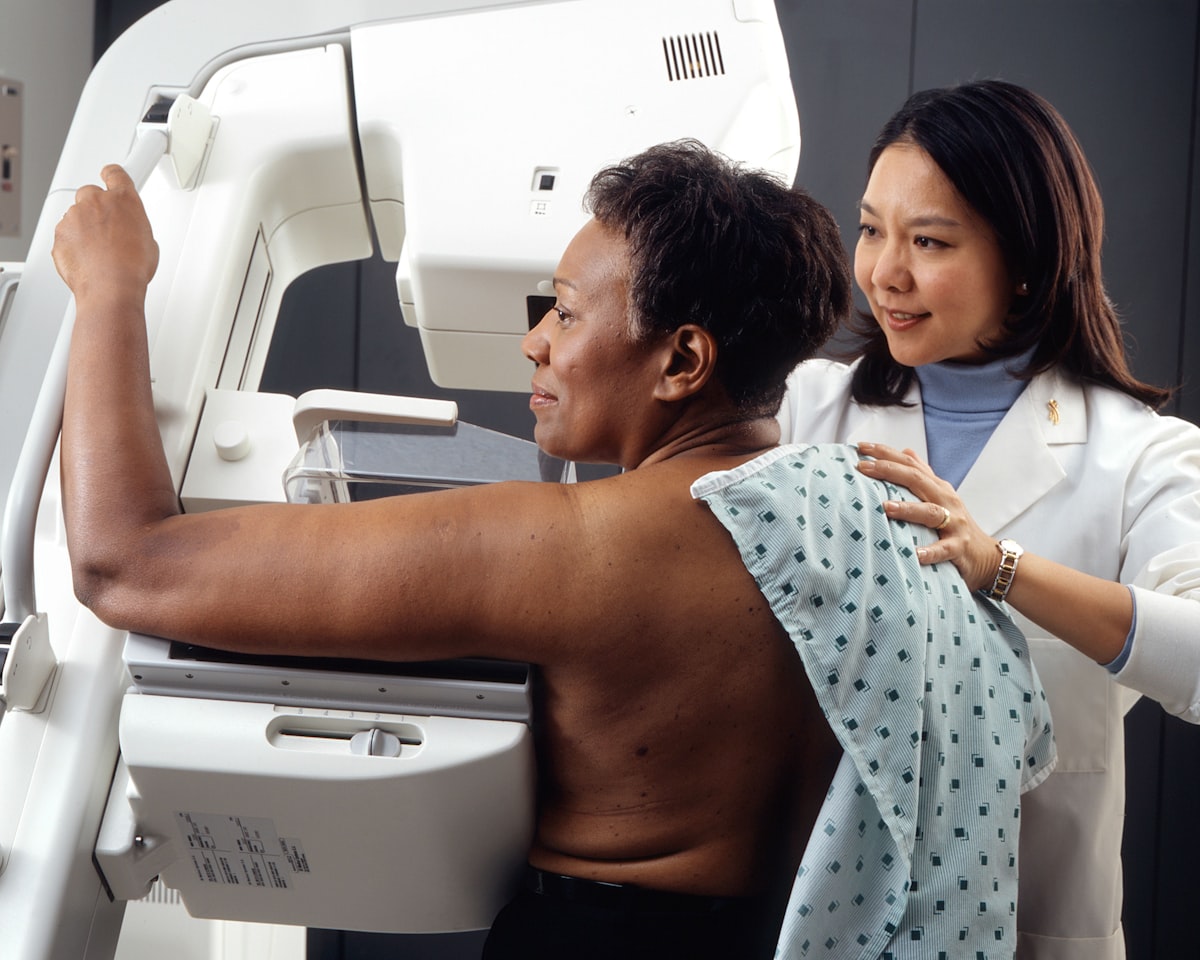
When the last automatic NHS breast screening invitation arrives — usually around the age of 70 or 71 — many women assume that this is the end of the road for breast screening. It is not. Breast cancer risk continues to rise with age, women over 70 still benefit from screening, and the NHS continues to offer mammograms on a self-request basis to women aged 71 and over. Knowing this is the difference between continuing to be screened and falling out of the system altogether.
This guide is part of our breast cancer screening cluster, alongside our complete plain-English guide to breast cancer screening and our companion piece on when to start having mammograms.
Why breast cancer risk does not fall after 70
Around one in three of all breast cancers in the UK are diagnosed in women over 70. The lifetime risk of breast cancer continues to rise with age — more than half of all breast cancers occur after the age of 60. The biological reasons are not fully understood, but the cumulative effect of cell divisions over a lifetime, combined with the changing hormonal environment after menopause, contributes.
Crucially, breast cancers diagnosed in older women are not necessarily slower-growing or less serious than those diagnosed in younger women. Some are; some are not. The variation is wide, and assuming that an older woman's cancer is unlikely to need treatment can lead to under-treatment of cancers that would have responded well to standard care.
Why automatic invitations stop at 71
The decision to end automatic invitations at age 71 reflects practical and statistical considerations rather than a judgement that screening is unhelpful in older women. Above 71, the marginal benefit of continued routine screening declines as competing causes of death (heart disease, dementia, other cancers) become more significant. The number-needed-to-screen to prevent one breast cancer death rises with age, although it remains favourable well into the seventies.
The NHS view is that screening above 71 should be a personal choice rather than a system default — and that women who want it should be able to access it on request. The challenge is that many women do not know this and assume the system has decided they no longer need screening at all.
How to request screening if you are over 71
Women aged 71 and over who wish to continue being screened can request a mammogram every three years by contacting their local NHS Breast Screening Service directly. You do not need a GP referral. The local service will book you in, and you will receive an appointment letter in the same way as women within the routine programme.
To find your local screening service, search 'NHS Breast Screening Service' followed by your county or local authority, or ask your GP practice for the contact details. Many practices will also help you arrange the request if you ask them to.
There is no upper age limit for self-requested breast screening on the NHS. The decision is yours, ideally informed by a conversation with your GP about your overall health, life expectancy, and personal preferences.
What to weigh when deciding
The decision about whether to continue screening past 71 is genuinely personal and there is no single right answer. Some considerations worth thinking through:
- Overall health and life expectancy. If you are in good general health, the case for continued screening is stronger. If you have a serious illness with a limited life expectancy, the marginal benefit of finding a slow-growing breast cancer earlier may be small.
- Family history. A strong family history of breast cancer continues to matter at any age.
- Your own experience of mammograms. If previous mammograms were uncomfortable or stressful, factor that into the decision.
- Your appetite for treatment. Screening is only useful if you would want treatment for a cancer that was found. For some women in their late seventies or eighties, the answer may be more nuanced.
- Your GP's view. Have an open conversation with your GP about whether continued screening makes sense for your individual circumstances.
Symptom awareness remains crucial — at any age
Whether or not you continue with mammograms past 71, being breast aware remains essential. Around half of breast cancers in older women are first noticed by the woman herself or a family member, often as a lump or skin change. The NHS list of symptoms applies at every age:
- A new lump or thickening in the breast or armpit, especially if painless.
- A change in the size, shape or feel of one breast.
- Skin changes — dimpling, puckering, redness, or a texture like orange peel.
- Nipple changes — newly inverted, discharge, or a rash.
- Persistent pain in one breast or armpit.
Any of these warrants a GP appointment within a week or two. Do not assume that a symptom in an older woman matters less than the same symptom in a younger one — it does not.
How treatment differs (and does not) for older women
Treatment decisions for breast cancer are now individualised based on the biology of the cancer and the patient's overall health, not on age alone. Many older women receive the full standard of care — surgery, radiotherapy, hormone therapy and targeted drugs — and do extremely well. Some treatments may be modified to reflect frailty or other health conditions, but a diagnosis of breast cancer in an older woman is far from a death sentence.
Hormone receptor-positive breast cancer, which makes up the great majority of breast cancers in older women, often responds very well to hormone therapy alone or in combination with limited surgery. Five-year survival rates for breast cancer in women aged 70–79 in the UK are above 75%, and the majority of older women diagnosed with breast cancer die of something else.
What this means for older women in lower-income countries
The conversation we have just had — about self-requesting screening, individualised treatment, and access to modern hormone therapy — is a UK conversation. In Indonesia, Pakistan, Bangladesh and across South and South-East Asia, the picture for older women with breast cancer is far more difficult: minimal screening, late diagnosis, and limited or unaffordable treatment access.
Closing this gap is what Breast Cancer Awareness exists to do. If you are an older UK woman who has benefited from the NHS programme, supporting work that extends the same opportunity to women elsewhere is one meaningful way to channel that gratitude into action.
How carers and family members can help
Many older women rely on family members or carers to help navigate the NHS — booking GP appointments, arranging transport, attending hospital with them. Breast screening is no exception, and family support often makes the difference between a mammogram happening and being put off indefinitely.
- If your mother, aunt, partner or older friend is between 50 and 71 and has not received a recent NHS screening invitation, encourage her to contact her GP or local screening unit. Address changes and registration mismatches are the most common reasons for missed invitations.
- If she is over 71 and would still like to be screened, offer to help her find the contact number for her local NHS Breast Screening Service and make the call together. Many older women do not realise they can request screening past 71.
- Offer to drive or accompany her to the appointment. Many screening units are stand-alone and not on direct bus routes, and the option of company can reduce anxiety significantly.
- Help her note any breast changes she is aware of so that she can mention them to the radiographer. A short written note is easier than trying to remember on the day.
- Respect her decision either way. Whether to continue screening past 71 is a personal choice, and it should always be hers — supported, not pressured.
What current research is telling us about screening older women
The evidence on extending breast screening past 70 is still developing. The UK AgeX trial, one of the largest randomised studies of screening age extension in the world, is following several million women to see whether routine invitations to ages 47–49 and 71–73 deliver a meaningful survival benefit at acceptable cost. Early results have been mixed, and final outcomes will inform NHS policy through the late 2020s.
What is already clear is that older women who do attend screening — whether by routine invitation or by self-request — benefit in similar ways to women in their fifties and sixties: cancers are found earlier, more women have less invasive surgery, and survival improves. The question is not whether screening works at older ages but whether the population-level case for routine invitation outweighs the costs and false-positive harms in a group with shorter average remaining life expectancy. That is a value judgement as much as a scientific one — which is precisely why the NHS leaves the choice to the individual after 71.